A POUND OF FLESH WITHOUT ANY BLOODSHED - SHYLOCK & THE MERCHANT OF VENICE
A Pound of Flesh without any Bloodshed - Shylock & The Merchant of Venice
Portia as lawyer
Shylock was a Jewish Money Lender. Antonio borrowed money from Shylock to help his intimate friend Bassanio court Portia, a wealthy and intelligent heiress from Belmont.
Antonio had no money to pay off Shylock's debt. Shylock demanded a pound of flesh from Antonio's body as compensation towards Antonio's debts. This was indeed a cruel demand. Portia, disguised as a lawyer, saves Antonio. This is the synopsis of the story.
The Merchant of Venice is a play written by William Shakespeare, the Bard of Avon, one of the major literary giants who ever lived in this world.
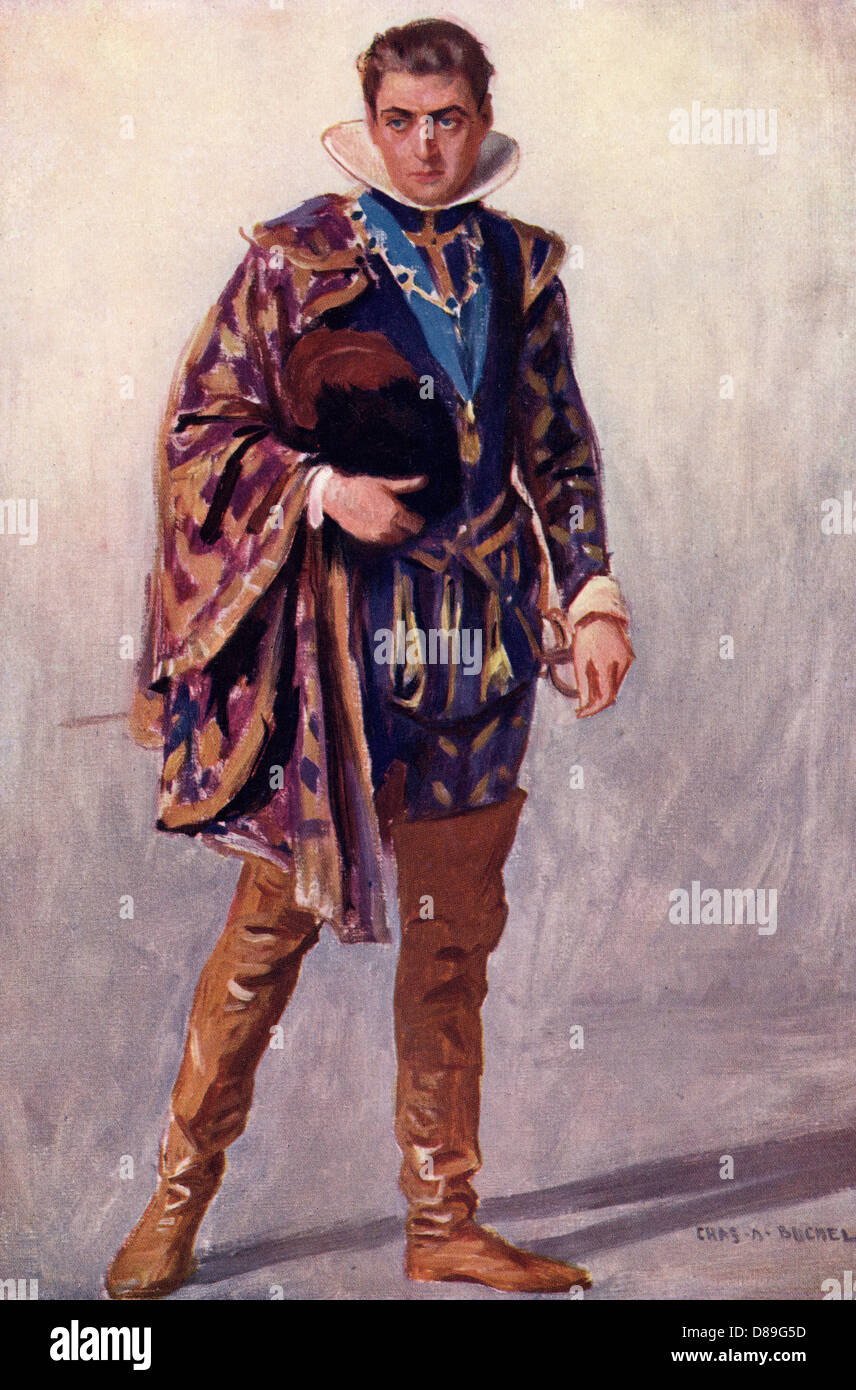
Bassanio
In Venice, a merchant called Antonio and his friend Bassanio discuss their problems. Bassanio wants money to be able to visit Portia, a wealthy heiress who lives in . He has met her once before and hopes to marry her.
Bassanio asks Antonio for a loan. Antonio says that he would lend him the money if he could, but all of his wealth is tied up in ships. He suggests Bassanio ask Shylock for a loan. Antonio says that he can act as guarantor for the loan.
Back in Venice, Antonio and Bassanio go to see Shylock about the loan for Bassanio. Because Christianity does not permit money-lending with interest, Antonio offers loans with no interest which takes money away from Shylock and other Jewish moneylenders. This makes Shylock dislike Antonio.
Antonio takes out a loan from Shylock on the condition that, if he cannot pay him back, he has to give him a pound of his flesh.
In Belmont, Portia is unhappy because she feels confined by her late father’s will, which requires her to marry only the suitor who chooses the correct one of the three caskets.
In Shakespeare’s time, it was very common for a father to choose who his daughter married. This took away women’s freedom to choose their own husbands and often meant women had to marry men they didn’t love.
In Belmont, Portia is visited by the Prince of Morocco who guesses the gold casket, which is incorrect. The Prince of Arragon also visits Portia and chooses the silver casket, which is also wrong.
So far, she has not liked any of the men who have attempted - and failed - to choose the correct casket. As she and her lady-in-waiting, Nerissa, reminisce about Bassanio's earlier visit, they both speak positively about him.
Shylock says that he will lend Bassanio three thousand ducats with no interest. However, Shylock then says that if the loan goes unpaid, he will be entitled to a pound of Antonio’s flesh.
Jeremy Irons as Antonio
There was discrimination towards Jews by Christians, which also hurts Shylock. He was hell-bound in putting that clause (a pound of flesh) if Antonio fails to repay the loan.
Bassanio encourages Antonio to say no, but Antonio agrees.

In Belmont, Bassanio arrives to see Portia and the two declare their love for each other. Bassanio quickly selects the correct casket, which is made of lead. He and Portia celebrate, and Gratiano, Bassanio’s friend, says that he has fallen in love with Nerissa.
Portia gives Bassanio a ring as a token of her love and says to him that he must never part with it. Nerissa also gave a ring to Gratiano.
In Shylock’s house, his servant Launcelot decides to leave Shylock and work for Bassanio.
Shylock's daughter Jessica elopes with his jewellery and some cash with one of Antonio's friends. That incident hurts more Shylock, and he becomes grieved and wants to take revenge against a Christian. Antonio was a Christian Merchant of Venice.
When Antonio loses all his money and ships, he becomes bankrupt.
When Portia learns that Antonio’s life is in danger because he cannot repay Shylock’s loan, she disguises herself as a young male lawyer (Balthazar) and appears in court to defend Antonio. During the trial, she delivers the famous “The quality of mercy is not strained” speech, arguing that true justice must be tempered with mercy. Although Shylock insists on the exact terms of his bond—a pound of Antonio’s flesh—Portia cleverly uses the law to show that Shylock may take the flesh but not a drop of blood, making it impossible for him to carry out the bond without breaking the law himself. This tactic ultimately saves Antonio.
The Duke declares that Antonio should reward Balthazar—who is actually Portia in disguise—for his assistance in the trial. Portia realises that Bassanio has not recognised her, and she plays a trick on him by refusing any monetary reward and instead asking for the ring she had given him. Bassanio refuses at first, but after Antonio persuades him, he reluctantly gives the ring away. Nerissa’s husband, Gratiano, also parts with his ring, the one Nerissa had given him.
In Belmont, Bassanio tells Portia that he gave the ring away. She pretends to be upset before giving Bassanio ‘another’ ring, which he immediately recognizes as the ring he gave away. Portia reveals that she was the lawyer, Balthazar, and forgives Bassanio.
Both Bassanio and his friend were pardoned by their wives.
The court ordered Shylock to give half his fortune to Antonio and the other half to the state. He was made to convert to Christianity and write a will leaving everything to his daughter, Jessica. Shylock was sentenced to prison for the rest of his life.
The circumstances in the play make Shylock a less hated figure for his agony and personal tragedy.
Portia has the major part in this play, followed by Shylock and Antonio (The Merchant of Venice).
Critics view The Merchant of Venice as complex "problem play" balancing romantic comedy with dark themes of antisemitism, justice vs. mercy, and the nature of prejudice, often focusing on the paradoxical figure of Shylock as both villain and victim, a product of Christian oppression yet driven by revenge, challenging simple morality and reflecting societal hypocrisies through themes of money, love, and the inherent flaws in human judgment.
Antisemitism & Prejudice: A central debate questions whether Shakespeare perpetuated anti-Jewish stereotypes or critiqued them. Critics find Shylock an archetypal villain due to his demand for "a pound of flesh," but also as a sympathetic figure, a victim of the harsh treatment he receives from the Christian community.
Al Pacino as Shylock
Al Pacino played Shylock's role in the 2004 film adaptation of Shakespeare's The Merchant of Venice, directed by Michael Radford, portraying him with nuance, dignity, and vulnerability, moving beyond a simple villain to a complex, wronged figure, a choice supported by Pacino's desire to address the play's anti-Semitism and humanise the character for modern audiences.
The play explores Shakespeare's view on Jews, usury, and trade, set in 16th-century Venice, and the conflict between virtue and evil.


Comments
Post a Comment