"THE VIRGIN AND THE GYPSY" - D.H. LAWRENCE
"THE VIRGIN AND THE GYPSY" - D.H. LAWRENCE
.
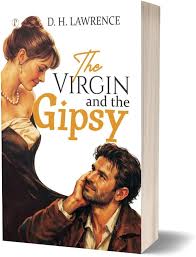
The Virgin and the Gipsy is a 1930 novella by English author D. H. Lawrence. It was written in 1926 and published posthumously in 1930. Today it is often titled The Virgin and the Gypsy, which can cause confusion because early editions used the spelling "Gipsy".
D. H. Lawrence is famous for Lady Chatterley’s Lover, a novel about love, class, marriage, and sexuality. It was controversial because of its explicit sexual content and was famously involved in an obscenity trial in the UK.
The Virgin and the Gypsy was discovered in France after D. H. Lawrence died in 1930. Immediately recognized as a masterpiece in which Lawrence had distilled and purified his ideas about sexuality and morality, The Virgin and the Gypsy has become a classic and is one of Lawrence's most electrifying short novels.
Set in a small village in the English countryside, it tells the story of a sheltered rector's daughter whose life is changed when she is introduced to a world of unfettered passion.
"The Virgin and the Gypsy" features a complex interplay of characters, focusing on Yvette Saywell, a rebellious and spoiled nineteen-year-old who struggles with her identity and relationships. At odds with her conventional family, particularly her father, the rector, and her controlling grandmother, Yvette finds herself drawn to the freedom represented by the Gypsies. Her older sister, Lucille, embodies a more pragmatic approach to life, balancing domestic responsibilities with her own flirtations. The narrative also introduces Joe Boswell, a Gypsy who becomes Yvette's lover and ultimately helps her rediscover her understanding of love and desire.
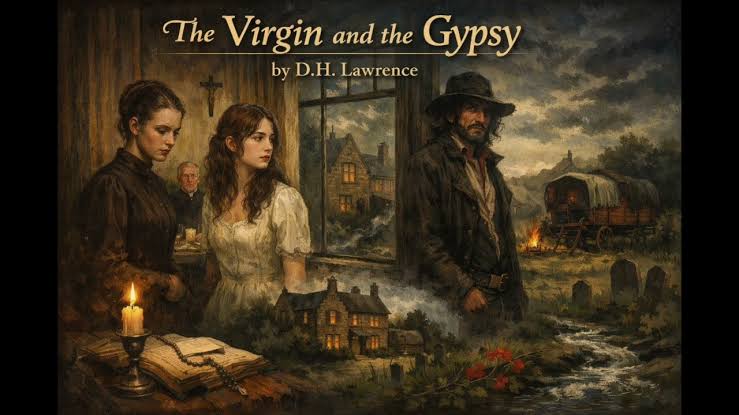
This is the story of a secluded, sensitive rector's daughter who yearns for meaning beyond the life to which she seems doomed. When she meets a handsome young gypsy whose life appears different from hers in every way, she is immediately smitten, and yet still paralyzed by her own fear and social convention. Not until a natural catastrophe suddenly, miraculously sweeps away the world as she knew it does a new world of passion open for her. Lawrence's spirit is infused with all his tenderness, passion, and knowledge of the human soul.
The novella is for a surprise twist at the end. A huge flood surges through the vale from a dam burst at a nearby reservoir. It just so happens that the gypsy man is approaching the rectory house. Nobody is at home but Yvette and her blind grandmother. In the nick of time, the brave gypsy man rescues Yvette, even though the surprise flood washes most of the rectory away, drowning the grandmother.
A moving scene ensues as the gypsy hero breathes life and warmth back into the virginal Yvette, who feels the powerful attraction of his manhood and strength. She falls asleep, and the gypsy disappears. Her family returns home to find her safe, and they adulate the gypsy as her savior.
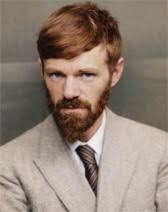
D. H. Lawrence was a British novelist, poet, and writer born in 1885 in Nottinghamshire, England. He is known for his novels Sons and Lovers, The Rainbow, Women in Love, and Lady Chatterley's Lover, as well as short stories like Odour of Chrysanthemums and The Rocking-Horse Winner. Lawrence attended University College Nottingham and wrote during the modernist period from 1907 to 1930 in Vence, France, until he died in 1930, with his remains later being moved to a ranch in Taos, New Mexico.
D.H. Lawrence (David Herbert Richards Lawrence) was an English writer of the 20th century, whose prolific and diverse output included novels, short stories, poems, plays, essays, travel books, paintings, translations, literary criticism, and personal letters. His collected works represent an extended reflection upon the dehumanizing effects of modernity and industrialization. In them, Lawrence confronts issues relating to emotional health and vitality, spontaneity, human sexuality, and instinct.
Lawrence's opinions earned him many enemies, and he endured official persecution, censorship, and misrepresentation of his creative work throughout the second half of his life, much of which he spent in a voluntary exile he called his "savage pilgrimage". At the time of his death, his public reputation was that of a pornographer who had wasted his considerable talents. E. M. Forster, in an obituary notice, challenged this widely held view, describing him as "the greatest imaginative novelist of our generation." Later, the influential Cambridge critic F. R. Leavis championed both his artistic integrity and his moral seriousness, placing much of Lawrence's fiction within the canonical "great tradition" of the English novel. He is now widely valued as a visionary thinker and a significant representative of modernism in English literature.
A Mini Biography -
Early Life:
THE VIRGIN AND THE GYPSY - (1970 MOVIE) :
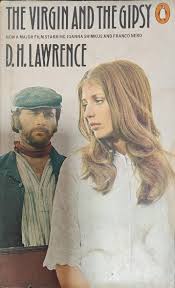
Virgin and the Gypsy is a 1970 British drama film directed by Christopher Miles and starring Joanna Shimkus and Franco Nero. The screenplay by Alan Plater was based on the novella of the same name by D. H. Lawrence. The film was voted "Best Film of the Year" by both UK and USA critics.
The story is a romance of blossoming spirit. Young Yvette embodies youthful unrest, curiosity, free thinking, and unprejudiced innocence. Yvette represents the desire for experience and freedom that Lawrence saw dominating the imaginations of England's younger generation. Her rebellious attitude highlights the theme of aspiration for authentic experience, and her natural attraction to the gypsy man reinforces it. Her day-to-day experience and her family's responses are meant to contrast the inexperience and desires of youth with the limitations imposed by the strictures of conventional society.
Key Characters -
Yvette Saywell: The rebellious, 19-year-old protagonist who longs for a life beyond her family's narrow moral boundaries.
The Gypsy (Joe Boswell): A free-spirited, virile nomad who awakens Yvette’s dormant desires.
The Rector (Arthur Saywell): Yvette’s hypocritical, mean-spirited father, who is deeply bitter after his wife abandoned him.
The Mater (Granny): Yvette's blind, overbearing, and manipulative grandmother who rules the household with emotional tyranny.
The Virgin and the Gypsy - (MOVIE REVIEW) :
Whilst Franco Nero does a decent job as a smoldering gypsy, the rest of the cast really needed an Alan Bates or Julie Christie to spark their characters in this rather timid adaptation of D. H. Lawrence's shorter story. On their way to the home she shares with her vicar father (Maurice Denham) and her family, "Yvette" (Joanna Shimkus) encounters the swarthy gypsy who invites them to have their fortunes told. Skeptical, they agree and shortly afterwards leave full of disdain for their erstwhile hosts. She, however, is smitten! Her sense of loneliness at home, a feeling that she is unloved and merely waiting to be married off, coupled with her increasingly raging hormones and desires, starts to reap discord a-plenty at home, especially with the traditionalist granny (Fay Compton) and her aunt "Cissie" (Kay Walsh). Things aren't helped by the visit of the adulterous "Mrs. Fawcett" (Honor Blackman) and her beau "Maj. Eastwood" (Mark Burns), turning their otherwise sleepy community into a veritable hotbed of sin and depravity - well, sort of! Anyway, there's allegory galore as the story develops, the frustrations mount, and the dam eventually bursts. The production standards are high; the costumes and general look of the film work well - but the screenplay produces way too much chatter, and this illustration of the story lacks bite, passion - indeed, just about anything. It's not the best of a novella from this author, but this adaptation is a bit too tame.
D.H. Lawrence's most famous and notorious book is Lady Chatterley's Lover, published in 1928.
D. H. Lawrence's collected works represent an extended reflection upon the dehumanizing effects of modernity and industrialization. In them, Lawrence confronts issues relating to emotional health and vitality, spontaneity, human sexuality, and instinct.
D.H. Lawrence is best known for his groundbreaking and controversial 20th-century novels that explored human sexuality, instinct, and the dehumanizing effects of modern industrial society.
**********************
The Virgin and the Gipsy is a 1930 novella by English author D. H. Lawrence. It was written in 1926 and published posthumously in 1930. Today it is often titled The Virgin and the Gypsy, which can cause confusion because early editions used the spelling "Gipsy".
D. H. Lawrence is famous for Lady Chatterley’s Lover, a novel about love, class, marriage, and sexuality. It was controversial because of its explicit sexual content and was famously involved in an obscenity trial in the UK.
The Virgin and the Gypsy was discovered in France after D. H. Lawrence died in 1930. Immediately recognized as a masterpiece in which Lawrence had distilled and purified his ideas about sexuality and morality, The Virgin and the Gypsy has become a classic and is one of Lawrence's most electrifying short novels.
Set in a small village in the English countryside, it tells the story of a sheltered rector's daughter whose life is changed when she is introduced to a world of unfettered passion.
"The Virgin and the Gypsy" features a complex interplay of characters, focusing on Yvette Saywell, a rebellious and spoiled nineteen-year-old who struggles with her identity and relationships. At odds with her conventional family, particularly her father, the rector, and her controlling grandmother, Yvette finds herself drawn to the freedom represented by the Gypsies. Her older sister, Lucille, embodies a more pragmatic approach to life, balancing domestic responsibilities with her own flirtations. The narrative also introduces Joe Boswell, a Gypsy who becomes Yvette's lover and ultimately helps her rediscover her understanding of love and desire.
This is the story of a secluded, sensitive rector's daughter who yearns for meaning beyond the life to which she seems doomed. When she meets a handsome young gypsy whose life appears different from hers in every way, she is immediately smitten, and yet still paralyzed by her own fear and social convention. Not until a natural catastrophe suddenly, miraculously sweeps away the world as she knew it does a new world of passion open for her. Lawrence's spirit is infused with all his tenderness, passion, and knowledge of the human soul.
PLOT:
Published posthumously in 1930, D.H. Lawrence’s novella The Virgin and the Gypsy follows Yvette Saywell, a restless young woman trapped in an emotionally suffocating English rectory. When a charismatic gypsy awakens her suppressed desires, a sudden catastrophic flood shatters her rigid family world, forever changing her understanding of life and passion.
Synopsis:
The tale of two sisters, daughters of an Anglican vicar, who return from finishing school overseas to a drab, lifeless rectory in the East Midlands, not long after World War I. Their mother has run off with another man, a fact that is not talked about by the family, especially the girls' father, who was deeply humiliated and only remembers his wife as she was when they first met many years before.
However, the girls try their utmost every day to bring color and fun into their lives. They go on outings with the Framleys, their neighborhood friends. On one such outing, Yvette encounters a gypsy man and his family. She and the other girls have their fortunes told by the gypsy man's wife, a magnetic, strong woman who seems to see easily through them. The gypsy man also sees deeply into Yvette, and the impression he makes on her this first time is unforgettable. This first meeting reinforces her disenchantment with the oppressive domesticity of her rectory. It also awakens in her a sexual curiosity she has not felt or thought much about before, despite her having admirers.
While on a second visit to the gypsy family, she befriends a married Jewish woman who has left her husband and is now living with her paramour, impatiently waiting for her divorce to come through. Yvette does not judge anyone new she meets, neither the gypsy nor the Jewish woman, because she is young and modern-minded. But when her father finds out about this friendship, he threatens her with "the asylum", and Yvette realizes that, at his heart, her father too is mean-spirited, bigoted, provincial, and shallow. Apparently, her father believes one cannot associate with a wealthy divorced woman who is merely marrying a handsome man who happens to be a war hero, as an excuse to dump her first and older husband.
Published posthumously in 1930, D.H. Lawrence’s novella The Virgin and the Gypsy follows Yvette Saywell, a restless young woman trapped in an emotionally suffocating English rectory. When a charismatic gypsy awakens her suppressed desires, a sudden catastrophic flood shatters her rigid family world, forever changing her understanding of life and passion.
Synopsis:
The tale of two sisters, daughters of an Anglican vicar, who return from finishing school overseas to a drab, lifeless rectory in the East Midlands, not long after World War I. Their mother has run off with another man, a fact that is not talked about by the family, especially the girls' father, who was deeply humiliated and only remembers his wife as she was when they first met many years before.
However, the girls try their utmost every day to bring color and fun into their lives. They go on outings with the Framleys, their neighborhood friends. On one such outing, Yvette encounters a gypsy man and his family. She and the other girls have their fortunes told by the gypsy man's wife, a magnetic, strong woman who seems to see easily through them. The gypsy man also sees deeply into Yvette, and the impression he makes on her this first time is unforgettable. This first meeting reinforces her disenchantment with the oppressive domesticity of her rectory. It also awakens in her a sexual curiosity she has not felt or thought much about before, despite her having admirers.
While on a second visit to the gypsy family, she befriends a married Jewish woman who has left her husband and is now living with her paramour, impatiently waiting for her divorce to come through. Yvette does not judge anyone new she meets, neither the gypsy nor the Jewish woman, because she is young and modern-minded. But when her father finds out about this friendship, he threatens her with "the asylum", and Yvette realizes that, at his heart, her father too is mean-spirited, bigoted, provincial, and shallow. Apparently, her father believes one cannot associate with a wealthy divorced woman who is merely marrying a handsome man who happens to be a war hero, as an excuse to dump her first and older husband.
The novella is for a surprise twist at the end. A huge flood surges through the vale from a dam burst at a nearby reservoir. It just so happens that the gypsy man is approaching the rectory house. Nobody is at home but Yvette and her blind grandmother. In the nick of time, the brave gypsy man rescues Yvette, even though the surprise flood washes most of the rectory away, drowning the grandmother.
A moving scene ensues as the gypsy hero breathes life and warmth back into the virginal Yvette, who feels the powerful attraction of his manhood and strength. She falls asleep, and the gypsy disappears. Her family returns home to find her safe, and they adulate the gypsy as her savior.
One day, she receives a brief note from the gypsy, "hoping to see her again," and then only here do both the reader and Yvette learn his name is Joe Boswell.
The reader knows that Yvette's feelings and understanding of life are changed forever.
About the author :
D. H. Lawrence was a British novelist, poet, and writer born in 1885 in Nottinghamshire, England. He is known for his novels Sons and Lovers, The Rainbow, Women in Love, and Lady Chatterley's Lover, as well as short stories like Odour of Chrysanthemums and The Rocking-Horse Winner. Lawrence attended University College Nottingham and wrote during the modernist period from 1907 to 1930 in Vence, France, until he died in 1930, with his remains later being moved to a ranch in Taos, New Mexico.
D.H. Lawrence (David Herbert Richards Lawrence) was an English writer of the 20th century, whose prolific and diverse output included novels, short stories, poems, plays, essays, travel books, paintings, translations, literary criticism, and personal letters. His collected works represent an extended reflection upon the dehumanizing effects of modernity and industrialization. In them, Lawrence confronts issues relating to emotional health and vitality, spontaneity, human sexuality, and instinct.
Lawrence's opinions earned him many enemies, and he endured official persecution, censorship, and misrepresentation of his creative work throughout the second half of his life, much of which he spent in a voluntary exile he called his "savage pilgrimage". At the time of his death, his public reputation was that of a pornographer who had wasted his considerable talents. E. M. Forster, in an obituary notice, challenged this widely held view, describing him as "the greatest imaginative novelist of our generation." Later, the influential Cambridge critic F. R. Leavis championed both his artistic integrity and his moral seriousness, placing much of Lawrence's fiction within the canonical "great tradition" of the English novel. He is now widely valued as a visionary thinker and a significant representative of modernism in English literature.
A Mini Biography -
Early Life:
- Birth: Born in Eastwood, Nottinghamshire, England, the fourth child of a coal miner and a schoolteacher, on 11 Sept. 1885.
Education: Attended Nottingham High School and earned a scholarship to Nottingham University College.- Early Career: Worked as a schoolteacher in Croydon while writing his early poetry and fiction.
Literary Career and Major Works -
- First Novels: Published his debut novel, The White Peacock, in 1911.
- Breakthrough: Gained literary prominence with Sons and Lovers (1913), an autobiographical novel examining working-class mining life and complex family dynamics.
- Censorship Struggles: Wrote The Rainbow (1915) and Women in Love (1920), which faced severe backlash and censorship for their radical and frank portrayals of human desire.
- Later Masterpiece: Privately published Lady Chatterley's Lover in 1928, which sparked notorious obscenity trials due to its explicit language and cross-class sexual themes.
Exile and Later Life
- Travels: Spent much of his later life in voluntary self-exile—a period he called his "savage pilgrimage"—traveling through Italy, Australia, Mexico, and the United States.
- Death: Died of tuberculosis on 2 March 1930 in Vence, France, at the age of forty-four.
THE VIRGIN AND THE GYPSY - (1970 MOVIE) :
.jpg)
The film adaptation was made in 1970, directed by Christopher Miles from a screenplay by Alan Plater, and starring Imogen Hassall, Joanna Shimkus, Franco Nero, Honor Blackman, Mark Burns, and Fay Compton. The work was broadcast as a radio play on BBC Radio 4 on 29 July 2017 at 21:00.
Virgin and the Gypsy is a 1970 British drama film directed by Christopher Miles and starring Joanna Shimkus and Franco Nero. The screenplay by Alan Plater was based on the novella of the same name by D. H. Lawrence. The film was voted "Best Film of the Year" by both UK and USA critics.
The story is a romance of blossoming spirit. Young Yvette embodies youthful unrest, curiosity, free thinking, and unprejudiced innocence. Yvette represents the desire for experience and freedom that Lawrence saw dominating the imaginations of England's younger generation. Her rebellious attitude highlights the theme of aspiration for authentic experience, and her natural attraction to the gypsy man reinforces it. Her day-to-day experience and her family's responses are meant to contrast the inexperience and desires of youth with the limitations imposed by the strictures of conventional society.
Key Characters -
Yvette Saywell: The rebellious, 19-year-old protagonist who longs for a life beyond her family's narrow moral boundaries.
The Gypsy (Joe Boswell): A free-spirited, virile nomad who awakens Yvette’s dormant desires.
The Rector (Arthur Saywell): Yvette’s hypocritical, mean-spirited father, who is deeply bitter after his wife abandoned him.
The Mater (Granny): Yvette's blind, overbearing, and manipulative grandmother who rules the household with emotional tyranny.
The Virgin and the Gypsy - (MOVIE REVIEW) :
Whilst Franco Nero does a decent job as a smoldering gypsy, the rest of the cast really needed an Alan Bates or Julie Christie to spark their characters in this rather timid adaptation of D. H. Lawrence's shorter story. On their way to the home she shares with her vicar father (Maurice Denham) and her family, "Yvette" (Joanna Shimkus) encounters the swarthy gypsy who invites them to have their fortunes told. Skeptical, they agree and shortly afterwards leave full of disdain for their erstwhile hosts. She, however, is smitten! Her sense of loneliness at home, a feeling that she is unloved and merely waiting to be married off, coupled with her increasingly raging hormones and desires, starts to reap discord a-plenty at home, especially with the traditionalist granny (Fay Compton) and her aunt "Cissie" (Kay Walsh). Things aren't helped by the visit of the adulterous "Mrs. Fawcett" (Honor Blackman) and her beau "Maj. Eastwood" (Mark Burns), turning their otherwise sleepy community into a veritable hotbed of sin and depravity - well, sort of! Anyway, there's allegory galore as the story develops, the frustrations mount, and the dam eventually bursts. The production standards are high; the costumes and general look of the film work well - but the screenplay produces way too much chatter, and this illustration of the story lacks bite, passion - indeed, just about anything. It's not the best of a novella from this author, but this adaptation is a bit too tame.
D.H. Lawrence's most famous and notorious book is Lady Chatterley's Lover, published in 1928.
D. H. Lawrence's collected works represent an extended reflection upon the dehumanizing effects of modernity and industrialization. In them, Lawrence confronts issues relating to emotional health and vitality, spontaneity, human sexuality, and instinct.
D.H. Lawrence is best known for his groundbreaking and controversial 20th-century novels that explored human sexuality, instinct, and the dehumanizing effects of modern industrial society.
**********************


Comments
Post a Comment